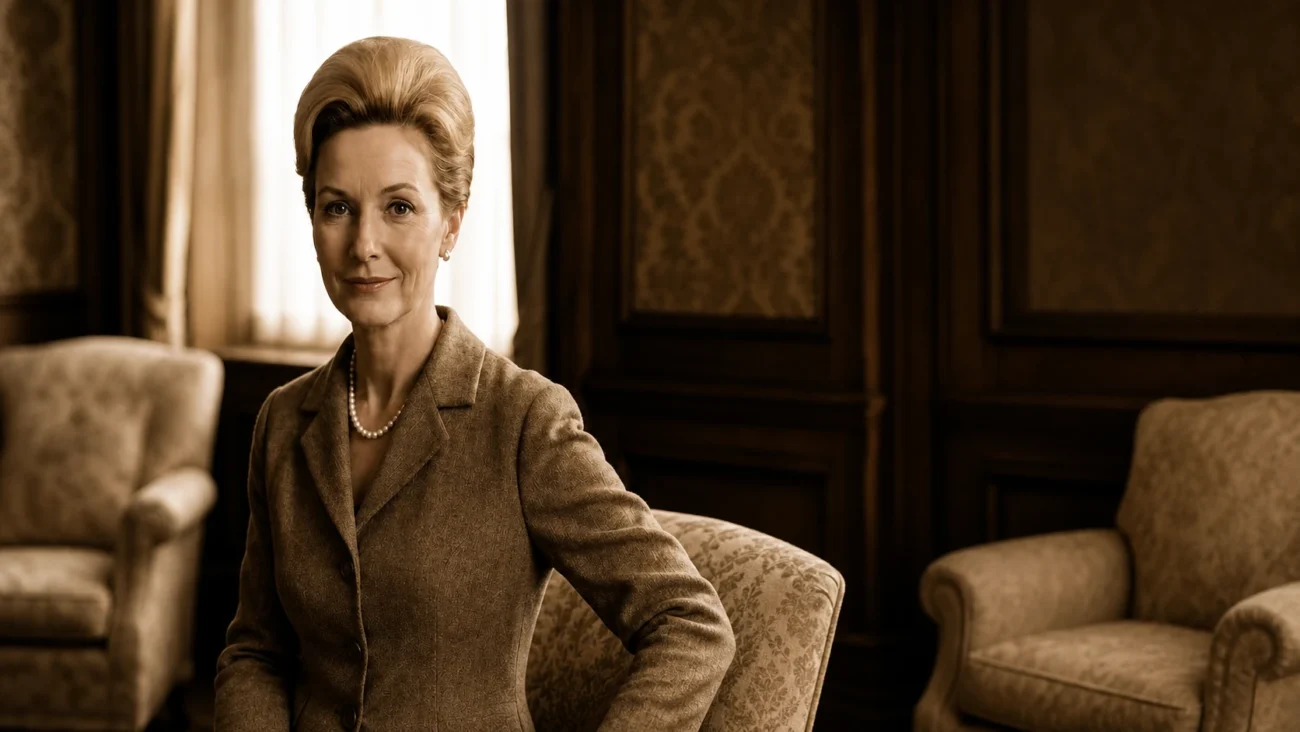
Jane Dobbins Green was Jane Elizabeth Dobbins, a Hollywood secretary who became the second wife of McDonald’s businessman Ray Kroc. Kroc identified her in his memoir as John Wayne’s secretary. The two met in 1963, married after a courtship of roughly two weeks, and remained married until 1968.
Her biography is easy to confuse with that of Joan Smith, Kroc’s eventual third wife. The distinction is important: Joan, not Jane, was the Hammond-organ player Kroc met at the Criterion restaurant in St. Paul in 1957, according to the Society for American Baseball Research’s account of Ray and Joan Kroc. Jane entered his life several years later.
Key takeaways
- Jane Elizabeth Dobbins was born in Walla Walla, Washington, in 1911 and later worked as John Wayne’s secretary.
- She married Ray Kroc on February 23, 1963, after an unusually brief courtship.
- Their marriage overlapped with a major period of McDonald’s expansion, but there is no reliable evidence that Jane held an executive or operational role in the company.
- Kroc’s renewed relationship with Joan Smith preceded the end of his marriage to Jane in 1968.
- Compiled genealogical records list Jane as having died in Los Angeles on August 7, 2000, at age 88.
Jane Dobbins Green profile summary
| Detail | Verified information |
|---|---|
| Full name | Jane Elizabeth Dobbins |
| Commonly known as | Jane Dobbins Green |
| Born | 1911, Walla Walla, Washington |
| Exact birth date | November 22, 1911, according to FamilySearch’s compiled record |
| Occupation | Secretary; Ray Kroc identified her as John Wayne’s secretary |
| Known for | Ray Kroc’s second wife |
| Marriage to Ray Kroc | February 23, 1963–1968 |
| Later relationship | FamilySearch associates her with Paul Donald Whitney |
| Death | August 7, 2000, Los Angeles, according to FamilySearch’s compiled record |
Early life and Hollywood work
The strongest biographical sources identify Jane as Jane Elizabeth Dobbins, born in Walla Walla, Washington, in 1911. SABR names her parents as David and Grace Duncan Dobbins, while FamilySearch’s compiled profile gives the fuller names David Warren Dobbins and Grace Myrtle Duncan.
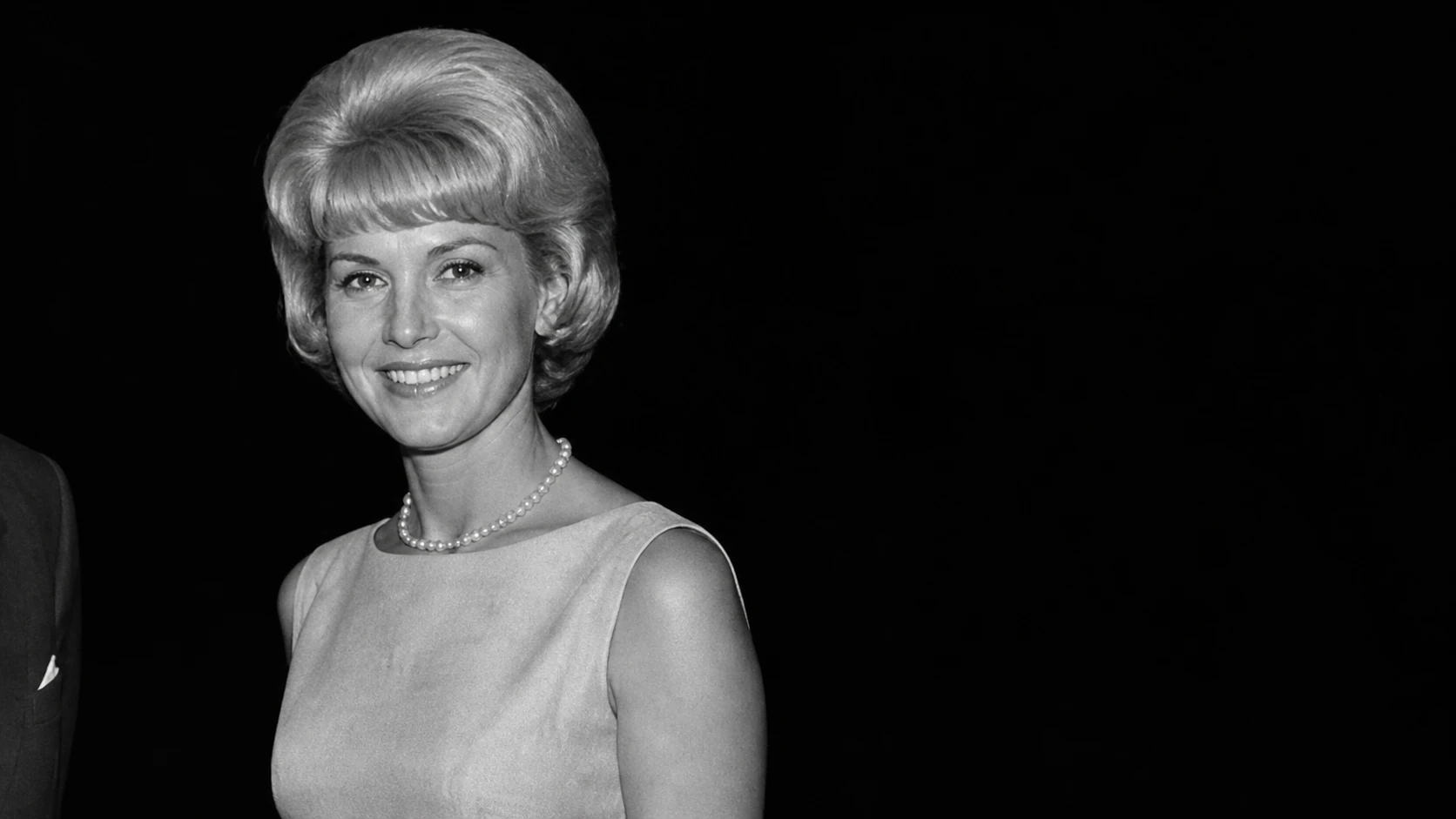
FamilySearch lists her exact birth date as November 22, 1911. Because that date comes through a compiled genealogical profile rather than a directly inspected birth certificate, the broader facts of her 1911 birth and Walla Walla birthplace are more firmly established than the precise day.
By the time Jane met Ray Kroc, she had a working life in Hollywood. In Ray Kroc’s memoir Grinding It Out, he identified her as John Wayne’s secretary. That firsthand account is the strongest evidence for her occupation.
The surviving record does not establish how long she worked for Wayne or what specific duties she handled. Claims that she had formal secretarial training, managed Wayne’s travel or publicity, or held a broader Hollywood executive role go beyond what the evidence supports.
Jane had also been married before meeting Kroc. SABR, drawing on biographer Lisa Napoli’s research, reports that she had already been married three times. A compiled FamilySearch profile records a marriage to Victor Wadeson Greene in Orange, California, on October 9, 1948. The complete sequence of Jane’s pre-Kroc marriages is not sufficiently documented to number each husband with confidence.
A fast courtship with Ray Kroc
Jane met Kroc in 1963 through a mutual friend. Kroc’s own recollection makes the speed of their relationship one of its most distinctive features.
In Grinding It Out, he wrote that he and Jane had dinner together on five consecutive nights. They married within about two weeks of meeting. SABR gives the wedding date as February 23, 1963.
This chronology also separates Jane’s story from Joan Smith’s. Kroc had met Joan years earlier, in 1957, when she was playing organ at the Criterion restaurant in St. Paul. At the time, Kroc was still married to his first wife, Ethel Fleming, and Joan was also married.
Jane entered Kroc’s life only after his marriage to Ethel had ended. She became his second wife, between Ethel and Joan.
Marriage during McDonald’s expansion
Jane and Ray’s five-year marriage coincided with a major phase in McDonald’s development. The company was expanding quickly, and on April 21, 1965, McDonald’s made its initial public offering, according to the company’s official stock history.
That corporate growth is useful context for Jane’s years with Kroc, but it should not be mistaken for evidence that she worked for McDonald’s. No strong source gives her an executive, operational or strategic role in the business.
Kroc wrote that he and Jane sold a property in Woodland Hills and moved to Beverly Hills during their marriage. Their names were also attached to another property associated with the Kroc era: the J&R Double Arch Ranch. A Los Angeles Times history of the property says the “J&R” stood for Jane and Ray.
Later accounts differ on the ranch’s original acreage, so the exact size at acquisition is less certain than the origin of the name.
Jane’s name also appeared in one of Kroc’s restaurant experiments outside McDonald’s. His memoir refers to a failed pie concept bearing her name, while a later Forbes account calls the venture “Jane Dobbins Pie Shops.” The evidence supports that Kroc named the business for Jane; it does not establish that she created, owned or operated it.
The end of the marriage
The marriage ended in 1968 after Kroc renewed his relationship with Joan Smith.
Kroc’s memoir describes the turning point from his own perspective. He and Jane had been planning a fifth-anniversary trip when his relationship with Joan again became central to his life. He decided that he wanted to end the marriage.
Biographer Lisa Napoli’s fact-check of The Founder reports that Kroc had his lawyer communicate the decision to his second wife. Kroc later wrote that he intended Jane to be financially secure and that she remained in their Beverly Hills home.
Those statements establish what Kroc said he arranged, but they do not reveal a verified divorce settlement. No reliable public figure for the amount Jane received, her assets after the divorce or her later personal wealth has been established.
Jane’s own account of the breakup has not surfaced in the sources used for her biography. That leaves an important boundary around the story: the documented sequence can be told, but her private feelings and motives cannot be reconstructed responsibly.
Ray and Jane’s marriage ended in 1968. Kroc married Joan Smith on March 8, 1969.
Family and later life
No child from Jane and Ray’s marriage is documented. The University of New Hampshire’s Ray Kroc business-history profile identifies Marilyn Kroc Barg, born during Kroc’s marriage to Ethel Fleming, as his only child.
That supports the narrower conclusion that Jane and Ray did not have a child together. It does not establish whether Jane had children in another relationship.
Her later life is less fully documented than her years with Kroc. FamilySearch’s compiled profile associates Jane with Paul Donald Whitney later in life. Earlier record indexing gives a 1984 marriage in Los Angeles, although the underlying marriage certificate was not directly examined.
Given the evidence that Jane had several marriages before Kroc, Whitney is best described simply as a later husband rather than being assigned a numerical place in her marriage history.
The same FamilySearch profile lists Jane’s death as August 7, 2000, in Los Angeles, at age 88, and records her burial at Westwood Memorial Park.
There is no comparably strong evidence for a specific cause of death, so claims that she died of “old age,” “natural causes” or a particular medical condition should not be treated as established fact.
Jane, Joan and The Founder
Much of the confusion around Jane comes from the tendency to merge her story with Joan Smith’s.
The best-supported chronology is straightforward. Kroc married Ethel Fleming in 1922; that marriage ended in 1961. He married Jane Dobbins Green in 1963, and their marriage ended in 1968. He married Joan Smith in 1969 and remained married to her until his death in 1984.
Joan was the woman Kroc encountered playing organ at the Criterion restaurant in 1957. Jane was the Hollywood secretary he met through a mutual friend in 1963.
The distinction also matters when discussing the 2016 film The Founder. Laura Dern portrays Ethel, while Linda Cardellini plays Joan. Jane does not have a named role. In her review of The Founder, New York Times critic Manohla Dargis specifically noted the absence of Kroc’s second wife.
Claims that Laura Dern played Jane are therefore incorrect. The evidence does not establish why the filmmakers left Jane out, so assigning a motive to that choice would be speculation.
What the record does not support
Several details repeated in modern biographies are weaker than the basic facts of Jane’s life.
No credible public record establishes a personal net worth for Jane. Figures ranging from modest sums to $1 million or more have appeared online without a reliable probate file, divorce settlement, financial disclosure or asset inventory to support them. Kroc’s statement that he intended to make Jane financially secure does not provide a usable valuation.
There is also no strong evidence for her formal education, exact professional duties, height, weight, religion, ethnicity or other personal profile details commonly added to biography templates.
Another recurring claim is that Jane intentionally “chose privacy” or deliberately avoided publicity. The documented fact is narrower: fewer first-person records from Jane are available than from Kroc. That absence does not prove a personal philosophy, temperament or decision to withdraw from public life.
Conclusion
Jane Dobbins Green occupies a relatively brief but clearly documented place in Ray Kroc’s life. She was a working Hollywood secretary, identified by Kroc as John Wayne’s secretary, who married him in 1963 and remained his wife through five important years of McDonald’s expansion.
Her biography becomes clearer once the unsupported additions are removed. Jane was not the Criterion organist Kroc met in 1957, no reliable personal net-worth figure has been established, and the surviving evidence does not support a detailed portrait of her inner life. What remains is a smaller but more defensible story: a woman with an independent Hollywood job whose short marriage to Kroc placed her alongside one of the most consequential periods in McDonald’s history.
